

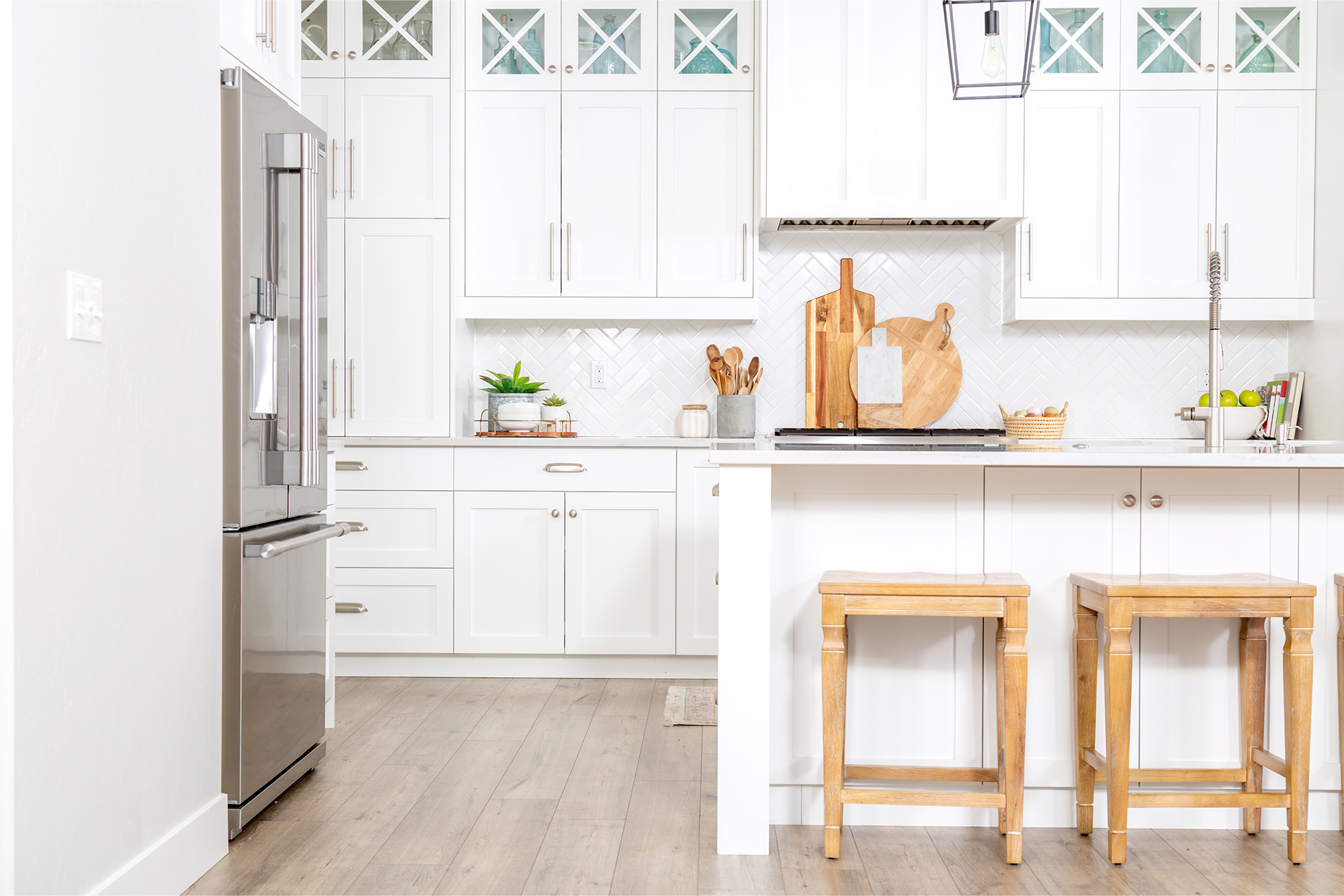
You reach for a cabinet you have opened a thousand times, and this time it does not sit flush anymore. Maybe the door catches on the frame. Maybe the drawer below it will not glide the way it used to. It is a small thing, but it is the kind of small thing that makes homeowners start Googling at eleven at night. The good news is that most of the time, the cause is ordinary and fixable. The less good news is that it is worth understanding why it happens here specifically, because Central Florida homes deal with a few pressures that other regions simply do not.
It Usually Starts With Moisture, Not the Cabinet Itself
Wood and wood composite materials expand and contract with humidity, and Central Florida gives them plenty of reason to move. Summer humidity indoors regularly sits in the mid to high fifties even with air conditioning running, and it climbs higher in kitchens and bathrooms where steam and dishwashers add extra moisture to the air. Cabinet doors absorb some of that moisture at the edges, particularly around cut panels and veneer seams, and they swell just enough to throw off the alignment that used to be perfect.
This is why the same door can feel fine in January and stubborn in August. It is not that the hinge broke overnight. It is that the door itself changed shape by a fraction of a millimeter, which is all it takes on a tightly fitted frame. Homes with lower grade particleboard boxes tend to show this pattern earlier and more dramatically than homes built with cabinet grade plywood, since particleboard absorbs moisture at a faster rate and does not return to its original shape as cleanly once it dries out.
Hinges and Hardware Wear Out Faster Here Than People Expect
Even when the wood itself is stable, hardware takes a beating in this climate. Metal hinges and drawer slides are exposed to the same humidity swings as the cabinet boxes, and over years that moisture contributes to loosened screws, stretched hinge springs, and slides that no longer hold their tension. A door that used to close with a soft click can start swinging open on its own or slamming instead of settling, and that is almost always a hardware issue rather than a structural one.
The fix is often simpler than homeowners assume. Re-tensioning or replacing a hinge, tightening screws into fresh wood, or swapping worn slides can solve the problem in under an hour in most cases. The mistake we see most often is homeowners assuming a sticking door means the whole cabinet needs replacing, when in reality the box is fine and only the hardware needs attention.
Sometimes It Is a Signal Worth Paying Attention To
Here is the part worth being honest about. Central Florida sits on limestone bedrock that dissolves slowly over time, and in some neighborhoods across Orange and Seminole County, gradual ground settling can shift a home just enough to throw doors and windows out of square. This is far less common than humidity related swelling, but it is real, and it typically shows up alongside other signs rather than in isolation.
If a cabinet door is the only thing acting up, humidity or hardware is almost certainly the cause. If you are also noticing new cracks in drywall near corners, tile cracking in a straight line, or a door elsewhere in the house that suddenly will not latch, that combination is worth a conversation with a structural professional before you worry about the cabinets at all. We are not structural engineers, and we will always tell a homeowner honestly when something looks like it is outside our lane.
A Quick Check Before You Call Anyone
A few minutes of looking can save a service call. Try these first:
Check whether the hinge screws are loose or spinning in the hole
Look at the door edge for visible swelling or a rough, raised texture
Test whether the issue is worse in humid months than in winter
Open and close a few nearby doors to see if the problem is isolated or spreading
If it is one door acting up on its own, it is very likely humidity or hardware. If several doors and drawers across the kitchen are affected at once, that points toward the cabinet boxes themselves rather than any single hinge.
Our installers see this pattern constantly across all of Central Florida, including Winter Park, Maitland, Lake Mary, Heathrow, Oviedo, Longwood, Altamonte, Winter Springs, and the surrounding areas of Seminole and Orange County, and the first thing we do on any service visit is figure out whether we are looking at a hardware fix, a material issue, or something that needs a referral to a structural professional. Most calls end with a simple hinge adjustment or hardware swap, done on the spot. When the cause is lower grade cabinet construction that is swelling faster than it should, we can talk through options for replacing just the affected boxes or planning ahead for a future upgrade to cabinet grade plywood.
If your cabinets have started acting up, do not wait for it to get worse or assume a full remodel is your only option. Reach out and we will take a look, explain exactly what is going on, and give you a straight answer about what it will take to fix it.
Based in Winter Park, FL, General American Services has proudly served Central Florida homeowners for over 20 years, including Winter Park, Maitland, Lake Mary, Heathrow, Oviedo, Longwood, Altamonte, and Winter Springs. Visit us at Central, FL or contact us to schedule a cabinet evaluation. Learn more about our cabinet installation services and let us help you get your kitchen back in working order.