

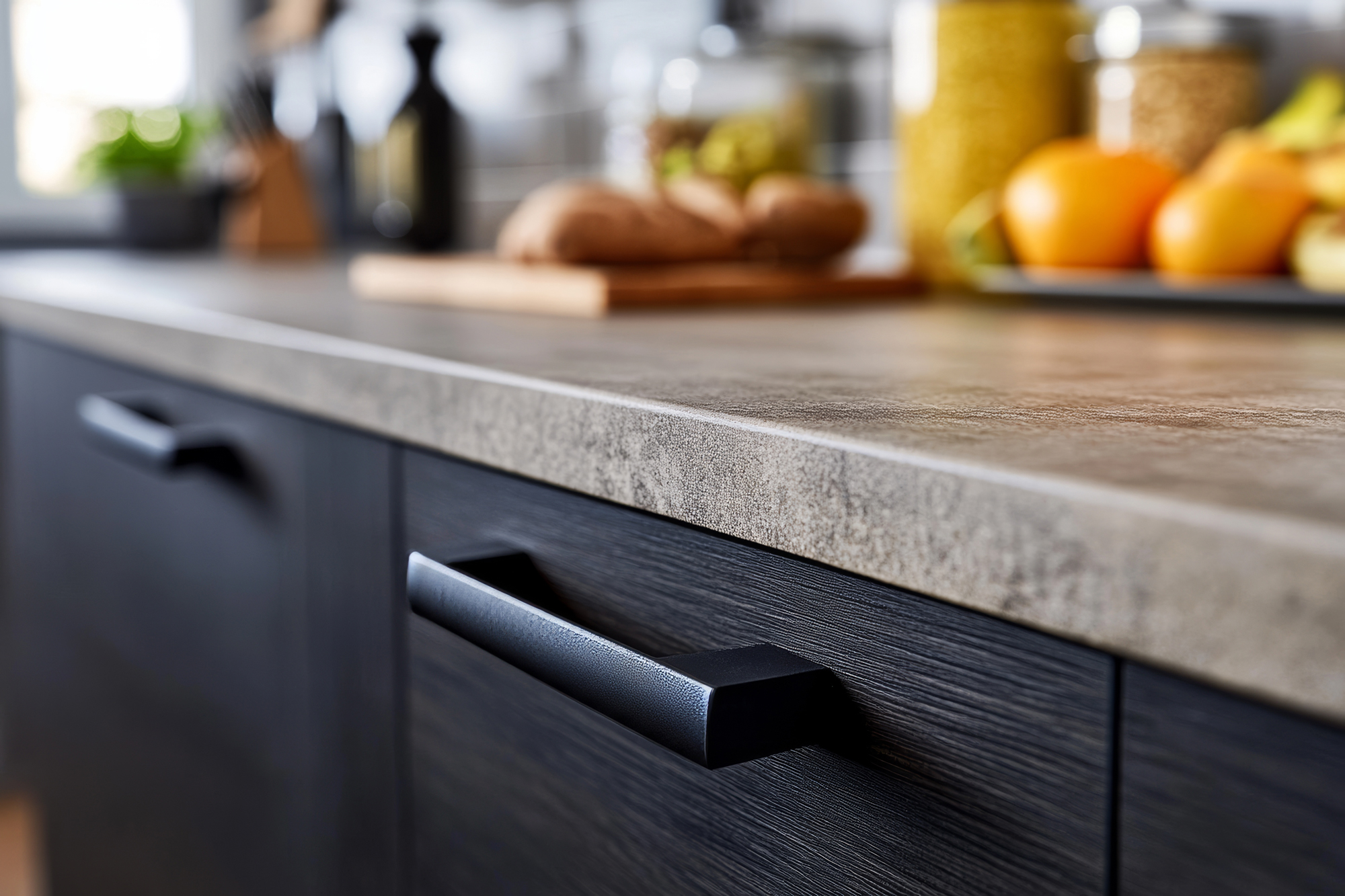
Thermofoil cabinet doors are marketed as affordable, seamless, and moisture-resistant—making them a popular choice in bathroom remodels. But in Florida, thermofoil’s biggest weakness is exposed faster and more aggressively than in almost any other climate: heat.
At General American Services, we regularly replace thermofoil doors for homeowners who were told they were “perfect for bathrooms.” In reality, Florida’s temperature swings, steam exposure, and UV load push thermofoil beyond its design limits.
What Thermofoil Actually Is
Thermofoil doors consist of a thin vinyl layer heat-wrapped over an MDF core using adhesive. The process creates a smooth, one-piece appearance with no seams—appealing in modern designs.
The problem isn’t moisture alone. It’s heat plus moisture, which Florida bathrooms generate daily.
The Adhesive Failure Point
Thermofoil relies on heat-activated glue to bond vinyl to MDF. In Florida bathrooms:
Steam showers raise ambient temperatures
Sun-exposed walls transfer heat inward
Poor ventilation traps warmth inside vanities
Once temperatures exceed the adhesive’s tolerance, the bond weakens. This leads to:
Peeling at corners and edges
Bubbling on flat surfaces
Separation around handles and hardware
Once peeling starts, it cannot be repaired—replacement is the only fix.
Why Bathrooms Are Worse Than Kitchens
Thermofoil failures often occur faster in bathrooms than kitchens because:
Steam creates localized heat spikes
Vanities are enclosed spaces with limited airflow
Heat accumulates under sinks and inside drawers
In Central Florida, failures can appear in as little as 2–5 years, even with “water-resistant” claims.
UV and Color Degradation
Florida sunlight adds another stressor. UV exposure through windows causes thermofoil to:
Yellow over time
Fade unevenly
Become brittle, accelerating cracking
White thermofoil is particularly vulnerable, often discoloring faster than painted or wood alternatives.
Better Alternatives for Florida Bathrooms
For homeowners seeking durability, better options include:
Painted solid-wood doors with catalyzed finishes
Acrylic or laminate slab doors rated for heat resistance
Wood veneer doors with sealed edges
These materials tolerate temperature fluctuations and moisture far better than thermofoil.
When Thermofoil Might Still Make Sense
Thermofoil may be acceptable in:
Powder rooms with no showers
Guest baths with minimal use
Interior bathrooms with excellent ventilation
Even then, it should be specified cautiously and never paired with steam features.
Choosing Cabinets for Florida Reality, Not Marketing
Thermofoil isn’t inherently bad—it’s just often misused. In Florida bathrooms, its limitations are exposed quickly, turning a “budget-friendly” choice into an expensive replacement.
At General American Services, we guide homeowners toward cabinet materials that survive real conditions—not showroom promises.
Contact General American Services to discuss cabinet options built for Florida homes. We serve all of Central Florida, including Winter Park, Maitland, Lake Mary, Heathrow, Oviedo, Longwood, Altamonte, Winter Springs, and the surrounding areas of Seminole and Orange County.