

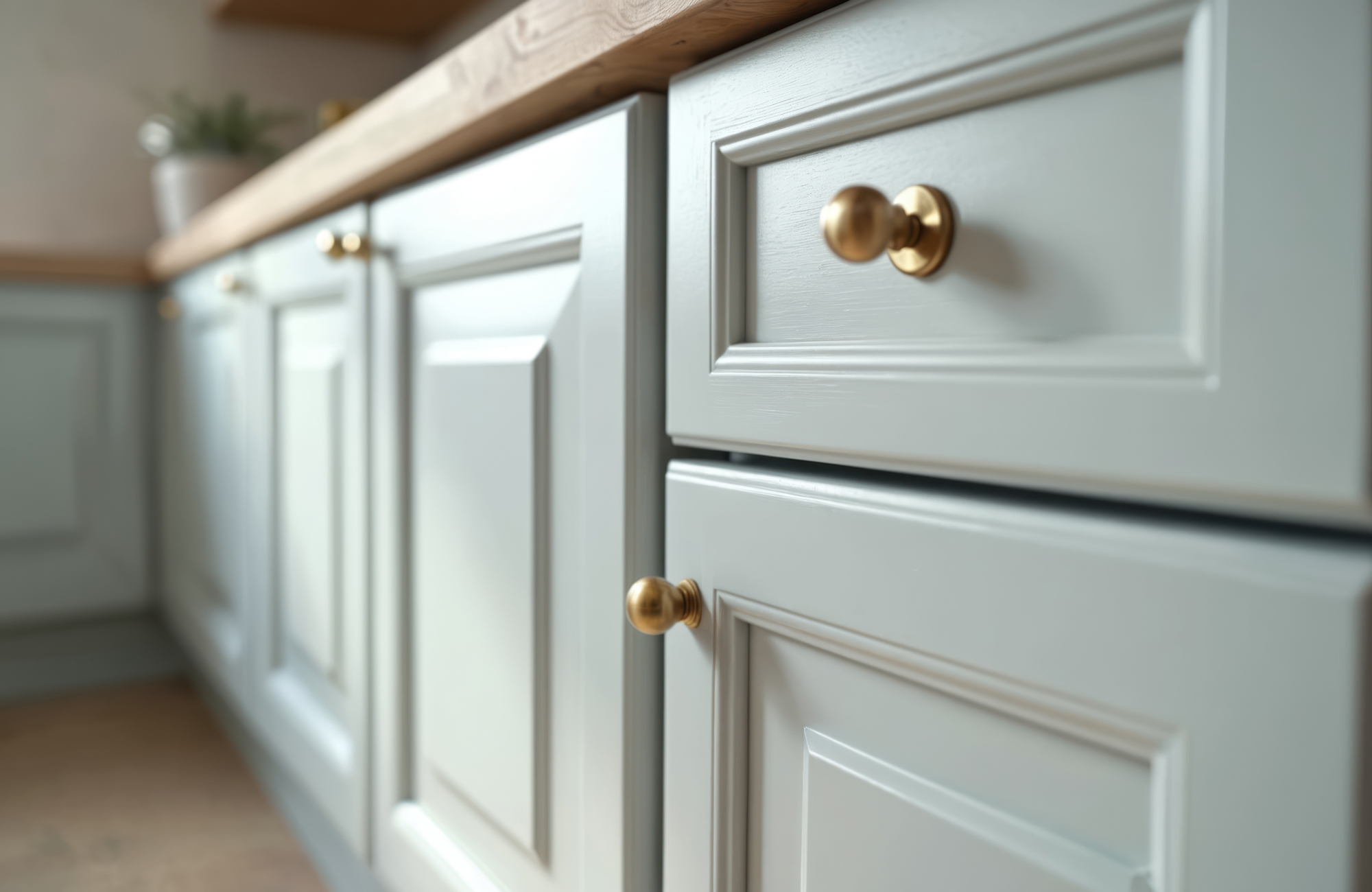
In Central Florida, cabinet doors that suddenly won’t close are rarely “random.” Humidity cycles, HVAC changes, daily use, and minor installation tolerances can combine until one day the door catches, rubs, or pops back open. The key is diagnosing whether the problem is the door, the hinge hardware, the cabinet box alignment, or moisture exposure.
The 4 most common reasons doors won’t close after humidity
1) The door moved (swelling or warping)
Signs:
Rubbing occurs on one edge or one corner
Gaps (reveals) change unevenly
The door looks slightly twisted when viewed from the side
Why it happens:
Moisture absorption changes door geometry. Solid wood doors can shift; some foil/laminated doors can react near heat sources; poorly sealed edges are especially vulnerable.
What to do:
If it’s minor, hinge tuning can restore clearance. If it’s persistent, door replacement or upgraded material/edge sealing may be required.
2) The hinges drifted or weren’t tuned correctly
Signs:
Door nearly closes but catches at the last inch
Door sits high/low compared to adjacent doors
Soft-close feels inconsistent
Why it happens:
Euro hinges have side, depth, and height adjustments. Small shifts over time can throw alignment off, especially if mounting screws don’t have strong bite.
What to do:
Perform a full hinge tune: side alignment first, then depth, then height. If screws strip, the long-term fix is restoring strong anchoring, not repeated tightening.
3) The cabinet box is out of level or racked
Signs:
Multiple doors/drawers in the same run start acting up
Drawer fronts rub or tilt
The whole cabinet line looks “off” when you compare reveal lines
Why it happens:
If a base run is slightly out of level or a wall cabinet run isn’t plumb, doors lose their square closing geometry. Flooring changes, settling, or load can exaggerate small errors.
What to do:
This often requires re-leveling, re-shimming, and verifying fastening into studs. If multiple doors are affected, adjust hinges last, not first.
4) There’s an active moisture or ventilation problem
Signs:
Musty smell inside cabinets
Swelling at sink base or toe-kick edges
Soft, crumbly edges or staining near plumbing or dishwasher
Why it happens:
Leaks, dishwasher steam issues, poor sealing around plumbing penetrations, or consistently high indoor humidity can keep materials swollen.
What to do:
Fix the moisture source first. Otherwise, door tuning becomes a repeating seasonal chore.
The fix hierarchy for Florida
Check for moisture exposure at sink base, dishwasher side, and toe-kick
Confirm cabinet run level/plumb if multiple doors are affected
Tune hinges (side, depth, height) for consistent reveals
Address door material/edge sealing if door movement is persistent
Upgrade hardware if alignment won’t hold under daily use
Call a pro when:
Multiple doors across a run won’t close
You see swelling, delamination, staining, or recurring seasonal misalignment
Hinge screws won’t hold or the cabinet box appears out of square
The issue returns quickly after adjustment
If your cabinets are part of a bigger remodel or you want an upgrade that holds up in Florida, contact General American Services to review options and get a plan tailored to your home. We serve Central Florida, including Winter Park, Maitland, Lake Mary, Heathrow, Oviedo, Longwood, Altamonte, and Winter Springs.