

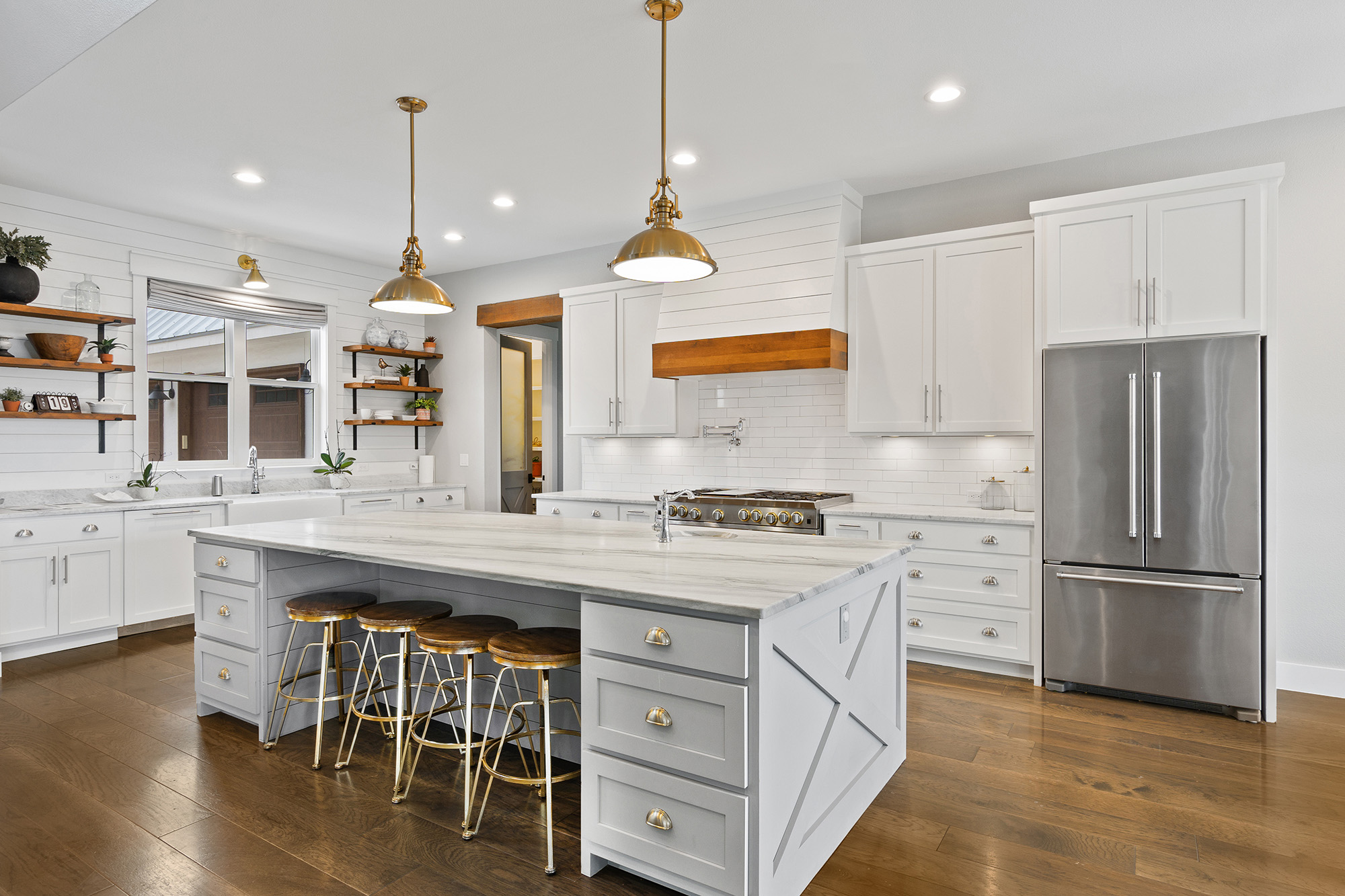
If you have ever painted or refinished cabinets in July and noticed the finish still feels slightly soft days after it should have hardened, you are not doing anything wrong. Paint cure time depends heavily on humidity, and Central Florida's wet season, which runs roughly from late May through September, creates exactly the kind of air that slows a finish down. Understanding why this happens helps you plan the timing of a cabinet project instead of being surprised by it partway through.
Curing Is Chemistry, and Humidity Slows the Reaction
Paint and cabinet finishes cure through a process where solvents evaporate and the remaining material cross links into a hard, durable surface. That evaporation step depends on the surrounding air being able to absorb moisture, and during Florida's wet season, the air is often already close to its saturation point. When the air cannot take on much more moisture, the solvents in a fresh coat of paint evaporate far more slowly than they would in a drier month.
This is different from the finish simply drying, which is a surface level effect where the paint no longer feels wet to the touch. Curing is a deeper process that continues well after the surface feels dry, and it is curing time, not drying time, that determines how soon a cabinet door can handle real use without denting, marking, or staying tacky under a hand or elbow. In dry conditions a quality cabinet finish might cure in one to two weeks. In peak wet season humidity, that same finish can take noticeably longer to fully harden.
Why This Matters More for Cabinets Than Almost Anything Else in a Home
Cabinets take a different kind of daily abuse than walls or trim. Doors get grabbed, drawers get slid open with some force, and countertops next to a freshly painted cabinet edge often get bumped by dishes and small appliances. A wall that is still curing just sits there. A cabinet that is still curing gets touched constantly, and every one of those touches during the cure window has the potential to leave a soft mark, a fingerprint impression, or a dull spot in an otherwise glossy finish.
This is part of why professional refinishers plan cabinet projects with wet season timing in mind rather than pushing a fixed schedule regardless of the forecast. A finish that looks perfect on day three can still be vulnerable on day ten if the humidity has been especially high, and knowing that window matters as much as the quality of the paint itself.
What Actually Helps a Finish Cure Properly in Summer
Ventilation and airflow make a real difference during the cure period. Running air conditioning steadily in the space, rather than letting the house sit warm and closed up, pulls moisture out of the air and gives the finish a better chance to cure at a normal pace. A small fan positioned to move air across the surface, without blowing directly on wet paint, also helps keep humidity from pooling right at the cabinet surface.
Beyond that, patience is the biggest factor. Resisting the urge to load cabinets back up with dishes, close doors firmly, or wipe down surfaces with cleaning products before the manufacturer's stated cure time has fully passed protects the investment far more than any trick or shortcut. If a project happens to fall in the middle of summer, building in a few extra days of buffer before putting cabinets back into daily use is a small adjustment that prevents a much bigger disappointment.
Signs a Cabinet Finish Needs More Time
It helps to know what to actually look for rather than guessing. A few signs suggest a finish needs more time before regular use.
The surface still feels slightly tacky or soft under light finger pressure
A fingerprint or light mark shows up and does not fade after a few minutes
The finish looks slightly cloudy or hazy in humid areas near the sink or dishwasher
Doors and drawers feel like they stick briefly when opened, even though hinges are properly adjusted
None of these mean the job was done poorly. They usually mean the cure clock needs a few more days than it would in a drier month.
How General American Services Plans Around This
Every cabinet project we take on across all of Central Florida, including Winter Park, Maitland, Lake Mary, Heathrow, Oviedo, Longwood, Altamonte, Winter Springs, and the surrounding areas of Seminole and Orange County accounts for the season it falls in, not just the calendar date on the estimate. If a project lands during peak wet season, we build realistic cure time into the schedule and walk homeowners through exactly what to expect day by day, so there are no surprises about when a kitchen is truly back to normal use.
If you are considering a cabinet refresh or a full replacement this summer, timing the project right makes a real difference in how the finish performs long term. Reach out and we will walk you through a schedule that fits both your kitchen and the season.
Based in Winter Park, FL, General American Services has proudly served Central Florida homeowners for over 20 years, including Winter Park, Maitland, Lake Mary, Heathrow, Oviedo, Longwood, Altamonte, and Winter Springs. Visit us at Central, FL or contact us to talk through your cabinet project timeline. Learn more about our cabinet installation services and let us help you plan it right the first time.